
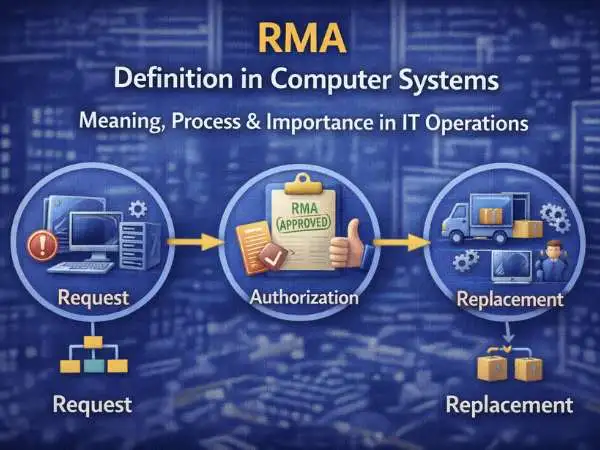
If you’ve worked in IT support, hardware engineering, or even purchased enterprise equipment, you’ve seen the term RMA more times than you can count. It shows up in emails from vendors, on shipping labels, inside warranty portals, and in procurement systems. Still, many people search for “RMA definition computer” or simply “RMA def” because the term sounds administrative when it’s actually operational.
RMA stands for Return Merchandise Authorization, but that short definition doesn’t capture its importance.
In computer systems and engineering environments, RMA is not just about returning broken hardware. It is about traceability, warranty control, quality feedback, risk management, and operational continuity. A poorly managed RMA process can increase downtime, inflate costs, and damage customer trust. A well-managed RMA system can improve product design and protect business margins.
Let’s break this down properly — in a way that reads like how real IT teams and engineering departments experience it.
RMA Definition in Computer Context
In computer hardware environments, an RMA (Return Merchandise Authorization) is a formal approval issued by a manufacturer or vendor that allows a defective or malfunctioning product to be returned for repair, replacement, or refund.
That approval is not optional. Without it, most vendors will reject the shipment.
An RMA is essentially a control mechanism. It ensures:
- The device is eligible under warranty
- The issue has been verified
- The return is traceable
- The resolution path is defined
When someone asks for the RMA definition in computer systems, this is the practical answer: it is a structured, documented authorization process for handling hardware failures.
also read : – 6 Main Differences Between Black Hat SEO and White Hat SEO
RMA Def: Why It’s More Than Just a Return
If you search “RMA def,” you’ll find a short definition. But in reality, RMA sits at the intersection of technical operations and business accountability.
In consumer electronics, RMA might look simple — send back a faulty keyboard, receive a replacement. In enterprise IT, it’s far more layered.
When a data center server fails, the RMA process determines:
- How fast the replacement arrives
- Whether downtime breaches an SLA
- Who absorbs the cost
- Whether engineering investigates a design issue
RMA becomes a workflow embedded into operational stability.
RMA Meaning in Engineering Environments
The RMA meaning in engineering extends beyond customer service. Engineers don’t just see RMA as a return. They see it as data.
Every returned unit tells a story:
- Was there a manufacturing defect?
- Did a component batch fail prematurely?
- Is the firmware unstable?
- Did environmental factors contribute?
When dozens of units are returned with similar faults, that pattern matters. Engineering teams analyze RMA reports to improve design reliability and reduce failure rates.
In that sense, RMA is not just reactive — it’s a feedback system for continuous improvement.
How the RMA Process Actually Works in IT Operations
Most people imagine RMA as a shipping event. In reality, it begins much earlier.
When hardware fails inside a corporate network, the IT team first verifies the issue. They run diagnostics, check logs, confirm firmware versions, and rule out configuration errors. Vendors typically require proof of troubleshooting before issuing an RMA.
Once the vendor confirms eligibility, an RMA number is generated. That number ties together:
- Product serial number
- Customer account
- Warranty status
- Reported issue
- Replacement terms
From that moment forward, every step is traceable.
The hardware is shipped — sometimes before a replacement is sent, sometimes after. Once received, the vendor’s technical team inspects the unit. They verify the failure, confirm no unauthorized damage occurred, and then determine whether to repair or replace.
The case is closed only after documentation is completed and inventory records are updated.
It’s procedural. It’s structured. And when scaled across thousands of assets, it becomes operationally critical.
Steps of an Efficient RMA Process
An efficient RMA process doesn’t happen by accident. It requires structure and discipline.
Verification Before Authorization
Issuing RMAs without verification increases cost and fraud risk. Vendors typically require logs, error screenshots, or diagnostic output before approving a return.
This step protects both sides. Customers avoid unnecessary downtime, and vendors avoid processing invalid claims.
Clear Authorization and Documentation
The RMA number acts as the anchor of the process. Without it, tracking becomes messy.
Efficient systems automatically link:
- Serial numbers
- Shipping tracking IDs
- Service level agreements
- Replacement inventory
The stronger the documentation, the smoother the workflow.
Inspection and Root Cause Analysis
When returned hardware arrives, technical teams do more than check functionality. They perform analysis.
Is this isolated failure?
Is it a recurring issue?
Is it related to environmental exposure?
This is where engineering insights begin.
Resolution and Replacement Strategy
Some vendors wait to receive the faulty unit before shipping a replacement. Others use advanced replacement models, where the new unit ships immediately.
The decision depends on:
- Contract terms
- Equipment criticality
- Customer tier
Enterprise-grade equipment often includes next-business-day replacement policies.
also read : – What Is The D2L MNSU Login Details
Best Practices for Managing RMA in Computer Hardware
Managing RMA effectively requires coordination between IT, logistics, finance, and engineering.
Centralized RMA Tracking Systems
Manual spreadsheets don’t scale. Mature organizations use asset management platforms that integrate RMA workflows directly.
This ensures visibility across:
- Procurement
- Inventory
- Support
- Engineering
When everyone sees the same data, accountability improves.
Warranty Visibility and Asset Tagging
Every enterprise device should have documented:
- Serial number
- Purchase date
- Warranty expiration
- Support tier
When failures happen, eligibility should be instantly verifiable.
Data-Driven Failure Analysis
RMA reports shouldn’t sit in archives. They should feed analytics dashboards.
If a specific router model shows elevated failure rates after 18 months, that insight informs procurement strategy.
RMA data can influence vendor selection.
Reducing Turnaround Time
Time is money in IT operations. The faster an RMA cycle closes, the less downtime occurs.
Organizations improve turnaround by:
- Pre-authorized replacements
- Regional repair hubs
- Clear packaging instructions
- Dedicated vendor support channels
The goal is predictable resolution timelines.
RMA in Consumer vs Enterprise Contexts
In consumer environments, RMA is usually transactional.
You submit a claim.
You receive a shipping label.
You get a replacement.
In enterprise IT, the stakes are higher.
A failed core switch can disrupt hundreds of users. A failed storage controller can halt business operations.
Enterprise RMA processes often include:
- Service-level agreements
- On-site technicians
- Escalation paths
- Spare inventory strategies
It’s not just a return. It’s a continuity safeguard.
also read : – What is CrackStreams? Everything You Need to Know
Financial Impact of Poor RMA Management
Poor RMA management leads to:
- Inventory discrepancies
- Warranty disputes
- Increased logistics cost
- Extended downtime
Even worse, repeated failures without analysis can erode customer trust.
Well-managed RMA systems reduce financial leakage and improve vendor accountability.
RMA and Supply Chain Implications
RMA trends can reveal supply chain weaknesses.
If returns spike after a specific manufacturing batch, the issue may lie upstream. Procurement and engineering teams review RMA data to identify supplier risk.
In this sense, RMA acts as a quality audit mechanism.
The Future of RMA in Computer Engineering
As hardware becomes smarter, RMA processes are evolving.
Modern systems increasingly rely on:
- Remote diagnostics
- Predictive maintenance
- Telemetry data
Some devices can alert vendors of impending failure before customers notice symptoms.
In such cases, RMA shifts from reactive to proactive replacement.
That changes operational models significantly.
also read : – How to Unblock The Bajaj EMI Card Online /Offline?
Final Thoughts on RMA Definition in Computer Systems
The RMA definition in computer environments goes far beyond “return authorization.” It represents a structured, traceable, and data-driven workflow that protects operational stability and informs engineering improvement.
When hardware fails — and it always will eventually — RMA processes determine how quickly organizations recover, how accurately vendors track issues, and how effectively engineering teams learn from failure patterns.
Understanding RMA means understanding the lifecycle of computer hardware in real-world operations.
FAQs
What does RMA mean in computers?
RMA means Return Merchandise Authorization — a formal approval to return defective hardware.
What is RMA meaning in engineering?
In engineering, RMA data helps identify product failures and improve design reliability.
What are the steps of an efficient RMA process?
Verification, authorization, shipping, inspection, resolution, and documentation.
Why is RMA important in IT operations?
It reduces downtime, ensures warranty compliance, and maintains asset traceability.
Can RMA be denied?
Yes. If the product is out of warranty or shows unauthorized damage, vendors may reject the claim.